Corrugated cardboard
What if the secret to building stronger, more epic creations was hiding inside the cardboard itself? Once you know how to use it, your builds will never be the same! It's time to level up; let's dive into the material to discover what makes cardboard really strong and learn how to use this knowledge to your advantage.
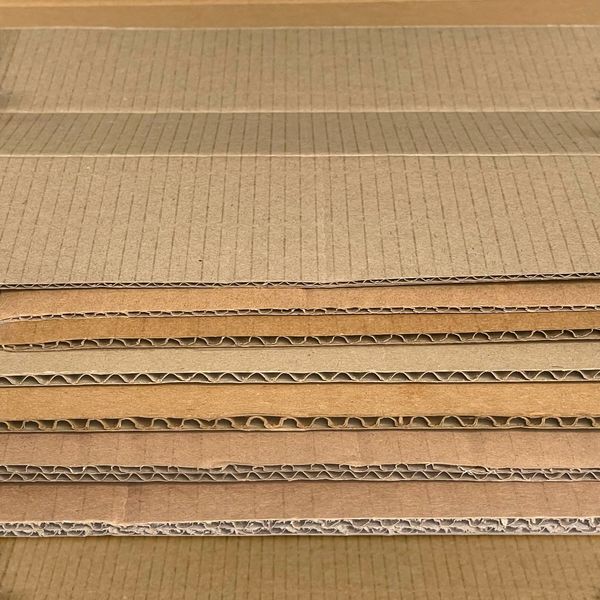
Corrugated cardboard consists of three layers: a top and bottom flat linerboard with a wavy inner layer between them, known as the flutes. These flutes are what enable structural rigidity in cardboard, and you can use this knowledge to make your own creations stronger!
Cardboard Fluting
Single-Wall Vs Double-Wall
Single-wall corrugated cardboard is the most common type and consists of a single corrugated flute layer sandwiched between two flat liner boards.
Single-wall: It's versatile across a wide range of projects, with strength varying depending on the thickness of the flute.
Double-wall: Double-wall adds a second flute layer for a significantly more rigid cardboard (think TV box!). It's the heavy-duty choice for sturdy structures, or if you want to support a lot of weight.
Flute size: Cardboard types are defined by letter grades. C-flute is the most widely used in medium and large boxes. It can strike a good balance between cushioning and strength. E-flute is thinner and more compact, and often used in shoeboxes, making it a great choice for robots, puppets, and other medium-sized objects. As a general rule, the further along the alphabet, the thinner the flute.
Play the flutes!
The fluting is designed for maximum strength when it is perpendicular to the floor, so consider this when creating bends and folds for strong structures.
What is cardboard fluting? The flutes are the wavy layer between the outer flat layers.
What is it for? Flutes make cardboard stronger, more lightweight, and better able to withstand being crushed!
Why does it vary in size? The varying thicknesses of cardboard result from different flute sizes. All corrugated cardboard thicknesses will work well with the Scru and Scru+ connectors.
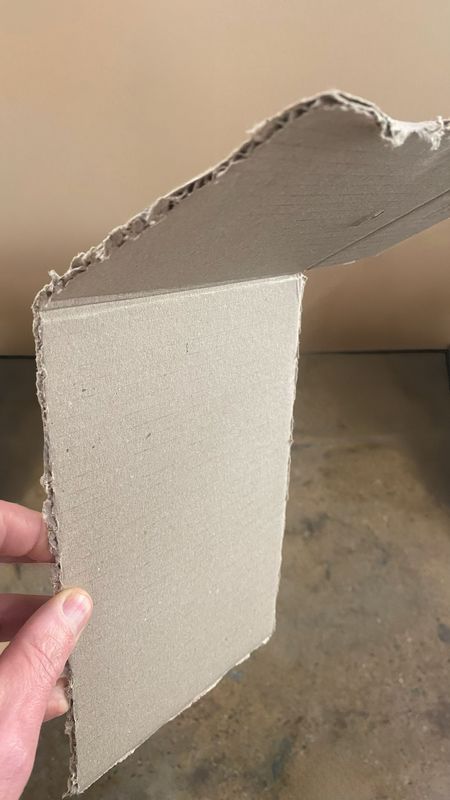
Perpendicular to flutes: Stronger folds will be made when perpendicular to the cardboard flutes. Observe on the boxes you have at hand to see how strength comes from bending across the cardboard flutes.
Cutting along or across flutes
Along or Across?
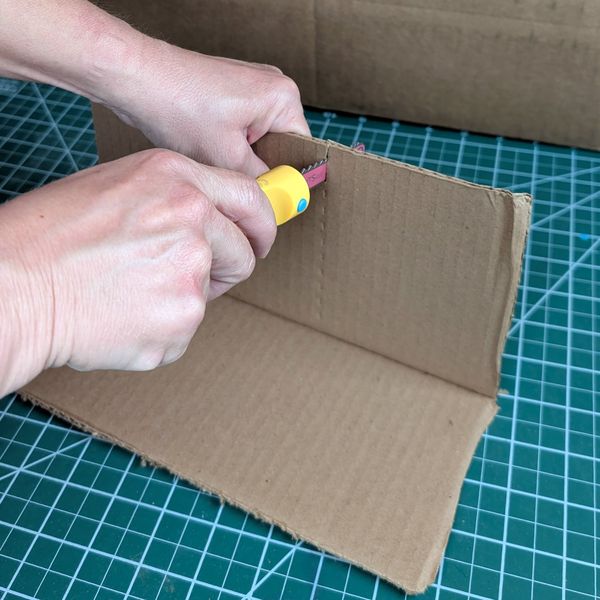
Makers can use the fluting for easier cuts with the Safe-Saw, or cut across the flutes for a stronger outcome in their final creation.
Assist cuts: Cutting along a flute makes it easier to cut a straight line.
Maintain strength: Cutting across the flutes helps preserve the cardboard's strength for wider shapes. Cutting in line with the flutes helps preserve strength for narrower or longer shapes.
Cut across the flutes and add a fold (also perpendicular/across the flutes) for the strongest outcome.
Folding and Flutes
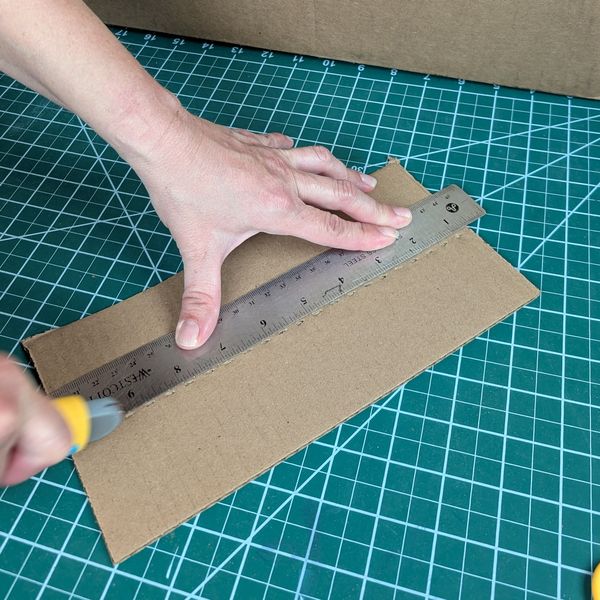
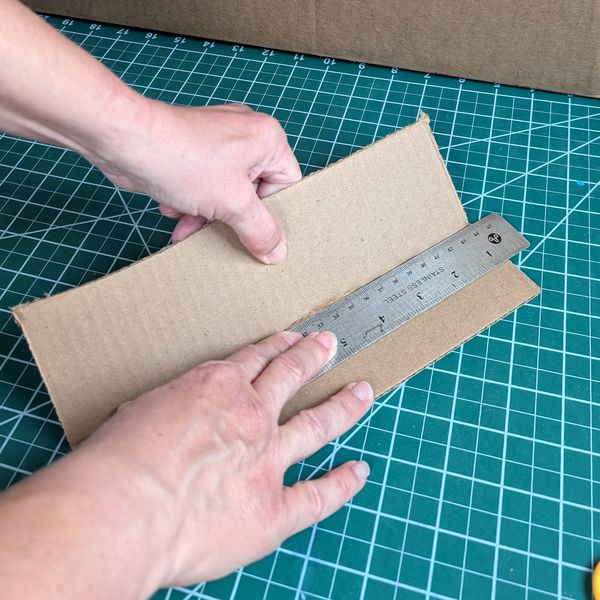
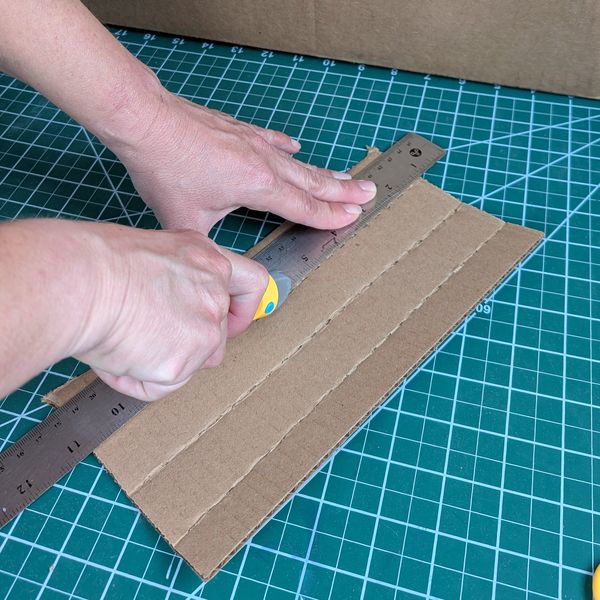
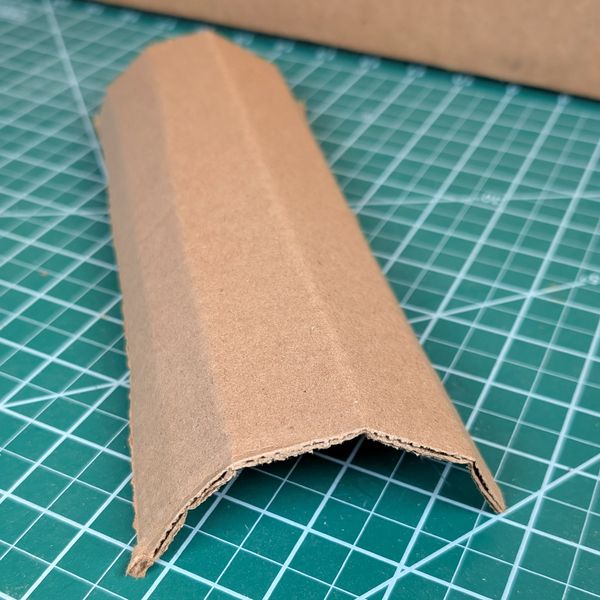
Make it Perpendicular
While it might seem easier to fold along the flutes, a stronger fold is made when bending perpendicular to (across) the inner cardboard flutes.
Keep it strong: Make the fold perpendicular to the flutes for added strength, and when making an L Brace or bracket.
Create a curve: To maintain structure while adding a curve to cardboard, use the Fold-Roller to mark lines perpendicular to the flutes, then fold and bend to create the curve.
Why not inline? If you make your curve inline with the flutes, the cardboard can lose its structure and strength, so unless it’s completely decorative, remember to place fold lines across the flutes rather than inline.
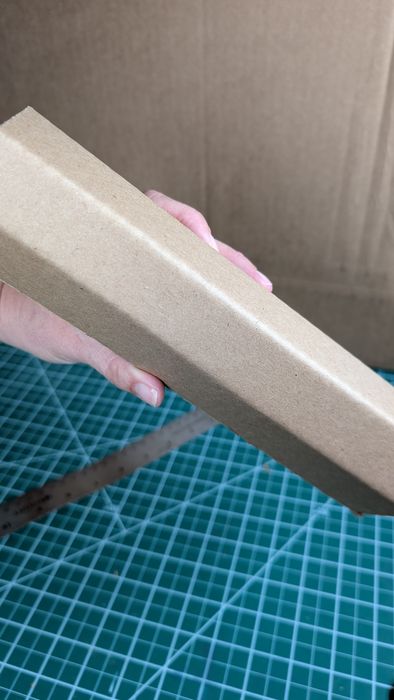
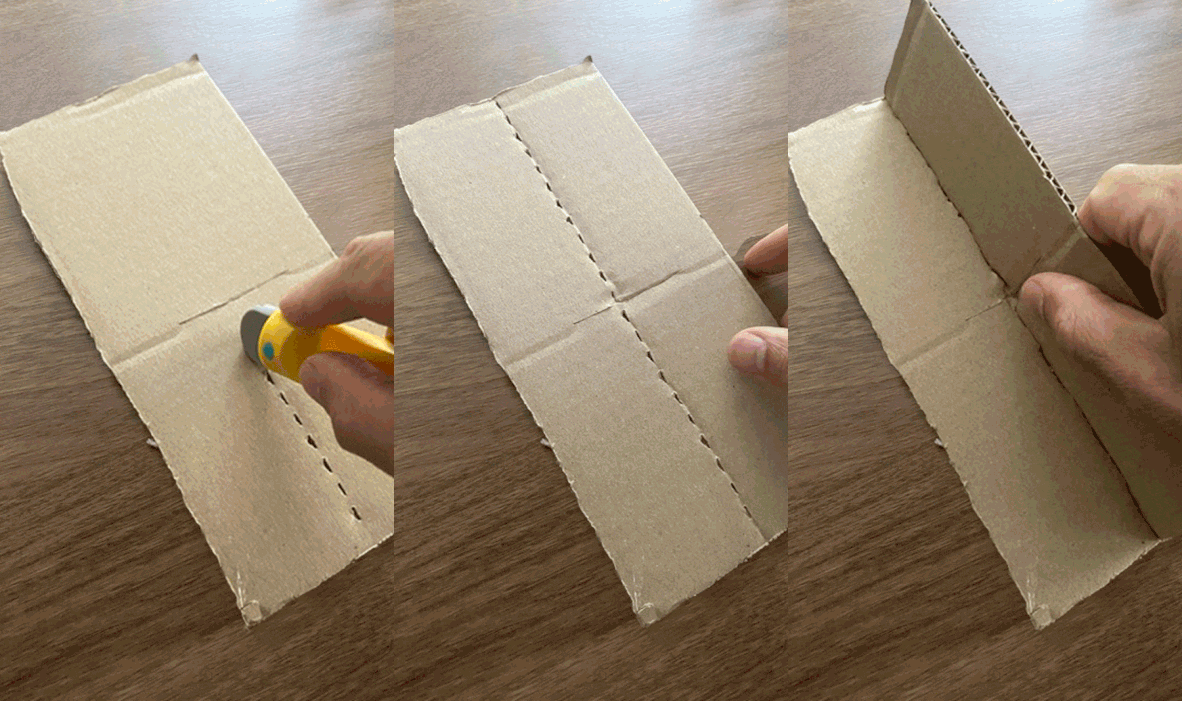
The Strength Test
The power of flutes
Try this quick experiment to feel the difference between folding with the flutes (inline) versus across the flutes (perpendicular).
Creating a Flange or Tab
Perpendicular for strength
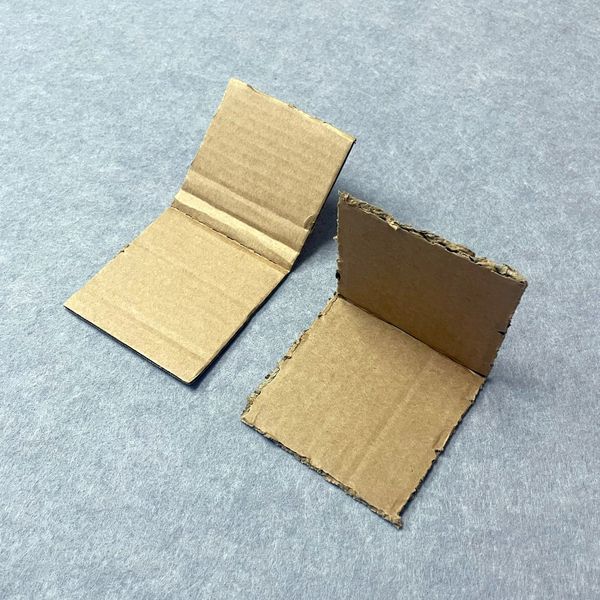
Do you want to add a flange or tab to your cardboard for connecting to another piece? Make sure the fold is perpendicular to the flutes for stronger connections. See more about connections in the Flanges, Tabs and Brackets guide.
Patch to Add Support or Repair
Restoring stability
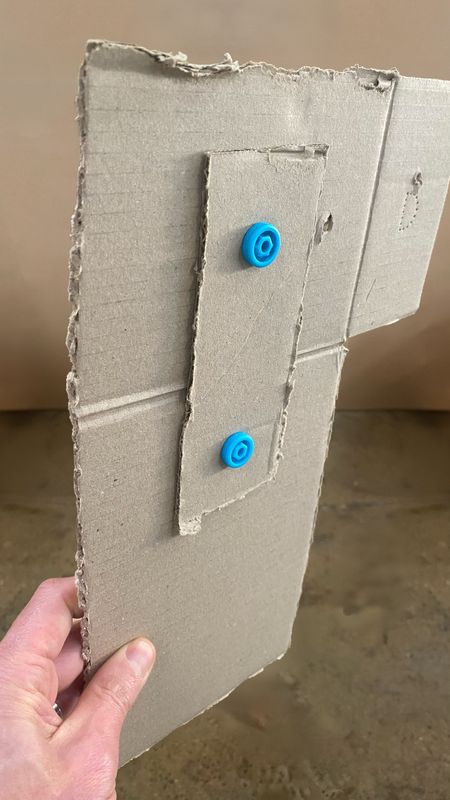
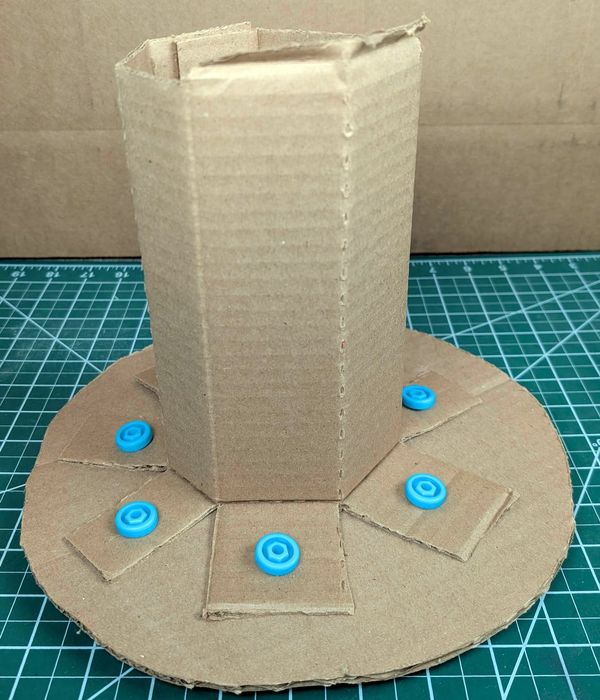
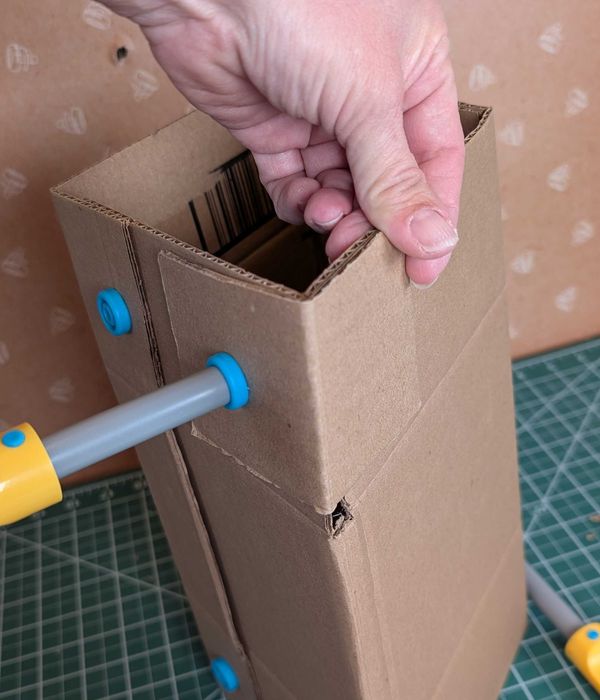
If you need to repair a floppy cardboard piece, you can use a patch with flutes running in opposing directions to add strength and help the cardboard stand up straight again!
Opposing Flutes: Attach a patch with flutes in opposing directions to the part you are repairing. Flutes on the patch should be perpendicular to the panel that needs support.