Science Concepts:
Force
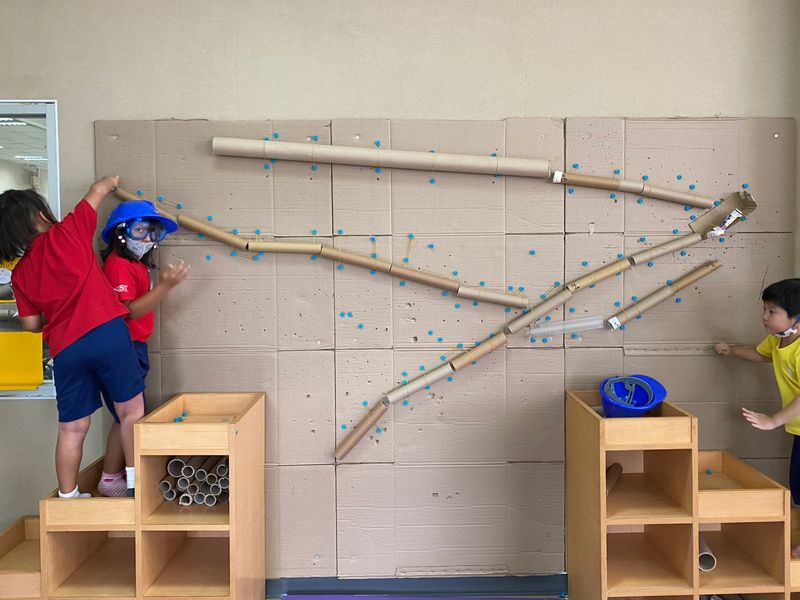
Force is a push or a pull that causes an object to move or change direction. A force happens when one object interacts with another. An object will not move unless a force acts on it.
Motion/Strength
There are three laws in Newton’s laws of motion.
An object will not change its motion unless a force acts on it.
The second law of motion concerns strength and size. The speed at which an object moves depends on its size and the force applied. For example, if you kick a soccer ball softly, it will not roll very far. But if you kick it with a lot of force, the ball will go much further.
For every action there is an equal and opposite reaction.
Push/ pull
A push is when you move an object away from you, and a pull is when you move an object towards you.
Direction
An object in motion will stay in motion in the same direction unless it encounters another force. For example, a ball will continue rolling straight unless it hits a wall, which will cause the ball to change direction. A ball will also continue to move, but it will slow down because friction is a force that resists motion and causes the ball to slow down.
Transfer of energy
Energy transfer is the process of changing or converting energy from one form to another. When objects collide, energy can be transferred from one object to another, which causes the object’s motion to change.
Patterns of motion
Motion happens when something moves or is moved. When the movement occurs, again and again in the same way, that is a pattern of motion. Observing these patterns can help us predict (or guess) how an object will move in the future.
Design and Technology Concepts:
Design
When designing something new, it is always a good idea to research and evaluate existing products. To help students understand this key concept, set up some games for them to explore. They do not have to be cardboard games, but they could be simple, handheld, or dollar-store games. By evaluating what is fun in an existing game, they can apply these ideas to their own game design.
Annotated Sketches
Show students how sketches can be labelled to show how different parts move, what each part of the game does, or how the part might move. Demonstrate how sketches can depict the same game from various angles.